Sibi
You see something on Instagram. You want to buy it. In 2016, that was harder than it had any right to be. Sibi bridged that gap.
2016
Founded
5
Platforms researched
2 years
Duration
Social → Purchase
Core insight
It's extremely difficult for social network patrons to purchase items that pique their interest on their favorite social networks. You see a jacket on Instagram, a lamp on Pinterest, a product on Snapchat — and then you're on your own. The purchase path disappears the moment you leave the app. Sibi was built to close that loop.
My Role
Co-founder. UX research, product vision, service safaris, user interviews.
Where judgment was required
The moments that shaped the product.
A research matrix mapping each platform against friction points in the discovery-to-purchase flow. Columns: platform. Rows: discovery quality, purchase path clarity, drop-off points, where the experience ended. The gap between Instagram's discovery strength and its purchase path is visually stark.
Service safaris across five platforms before writing a single requirement
Before defining what Sibi should build, I ran service safaris across Instagram, Pinterest, Facebook, Snapchat, Apple, Amazon, and Backcountry — not as a user, but as a researcher mapping every friction point between discovery and purchase. The goal was to find where the experience broke down, not to validate a pre-existing solution. The pattern that emerged was consistent: every platform optimized for discovery, and none of them owned what happened next. That gap was the product.
A timeline comparison: Sibi's founding (2016) alongside the eventual launch of Instagram Shopping and Pinterest Shopping. The timeline makes the timing visible — the insight was early, the execution was real, and the platform risk was structural.
Social commerce before the platforms figured it out
Sibi's core insight — that the moment of desire and the moment of purchase were separated by too much friction — was correct. The major platforms eventually built native shopping features (Instagram Shopping launched 2018, Pinterest Shopping in 2018-2019). We saw the problem early. The lesson is not that we were wrong, but that being right about a problem does not guarantee survival when the platform you depend on decides to solve it themselves.
Process
Service safaris across Instagram, Pinterest, Facebook, Snapchat, Apple, Amazon, Backcountry. Surveys and user interviews.
Mapped the social-to-purchase gap. Defined the core product: capture, discover, save, buy.
Responsive web homepage, mobile app screens, email templates. Product shipped.
Platform-native shopping features emerged. The market moved to where we were pointing.
What Shipped
5+
Platforms researched
2016
Founded
2 years
Duration
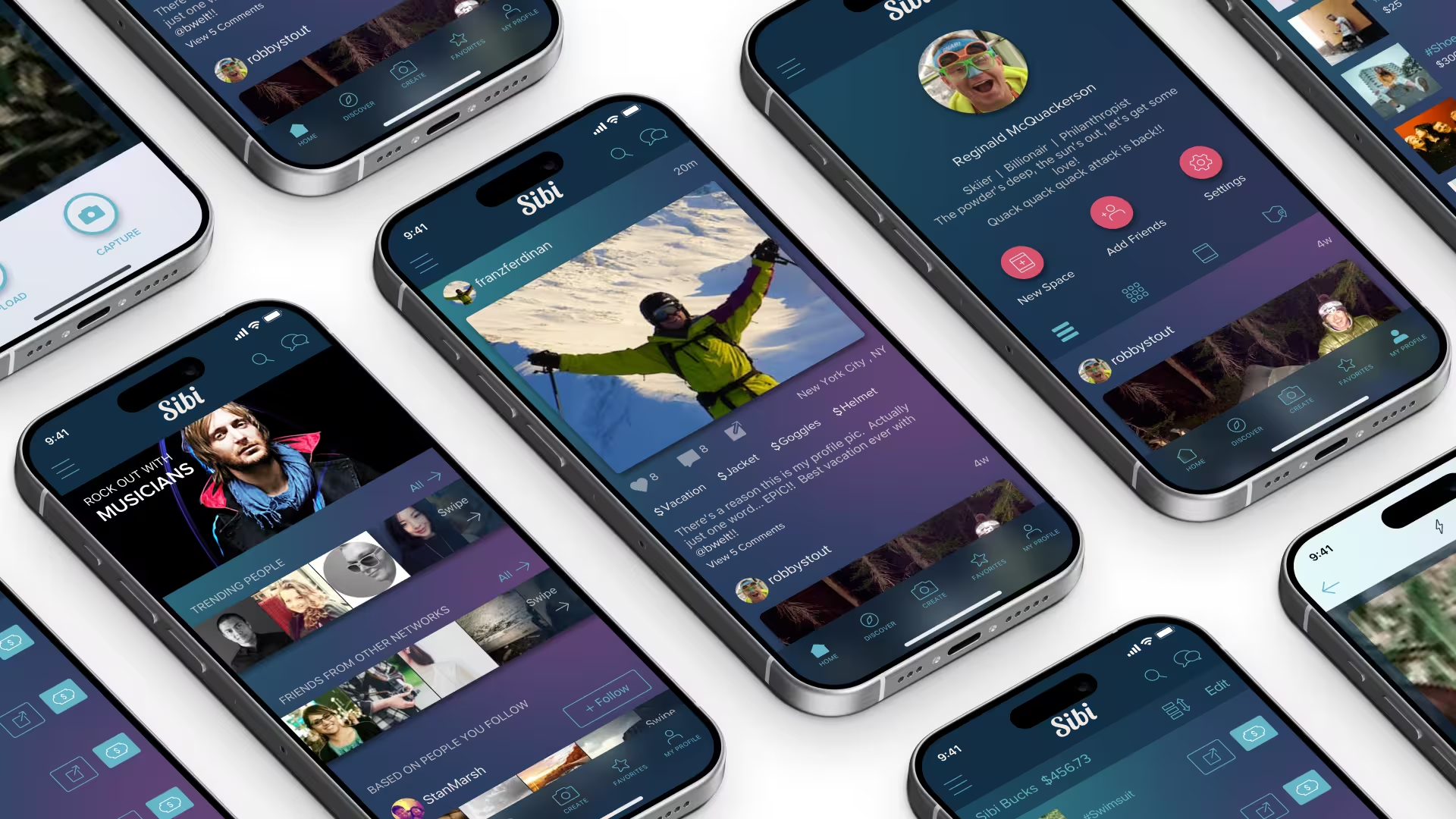
Sibi shipped a responsive web product and mobile app across key user flows: Capture+Upload, Discover, Favorites, My Profile, and Photos. The research foundation was thorough — service safaris, user interviews, and surveys across the major social platforms. The market eventually validated the insight: Instagram and Pinterest both built native shopping features within two years of Sibi's founding.
- Responsive web and mobile product shipped across core user flows
- Service safari research across five major social platforms documented the gap
- User interviews and surveys validated the core problem before building
- The platform risk that wound the company down also validated the thesis — they copied it
What I Learned
Platform dependency is a structural risk, not an execution risk. Sibi's core insight — that social discovery and purchase were separated by too much friction — was correct. Instagram and Pinterest eventually built what we were building. The thing that makes a platform-dependent product vulnerable is the same thing that makes it feasible: proximity to where the behavior already lives. The research methodology held up. Service safaris across competitors before writing requirements is a transferable practice. The UX research PDF documents the foundation. What it cannot document is what you learn from running a company long enough to watch the market prove you right after you've already moved on.
What this demonstrates
More Work
All projects →